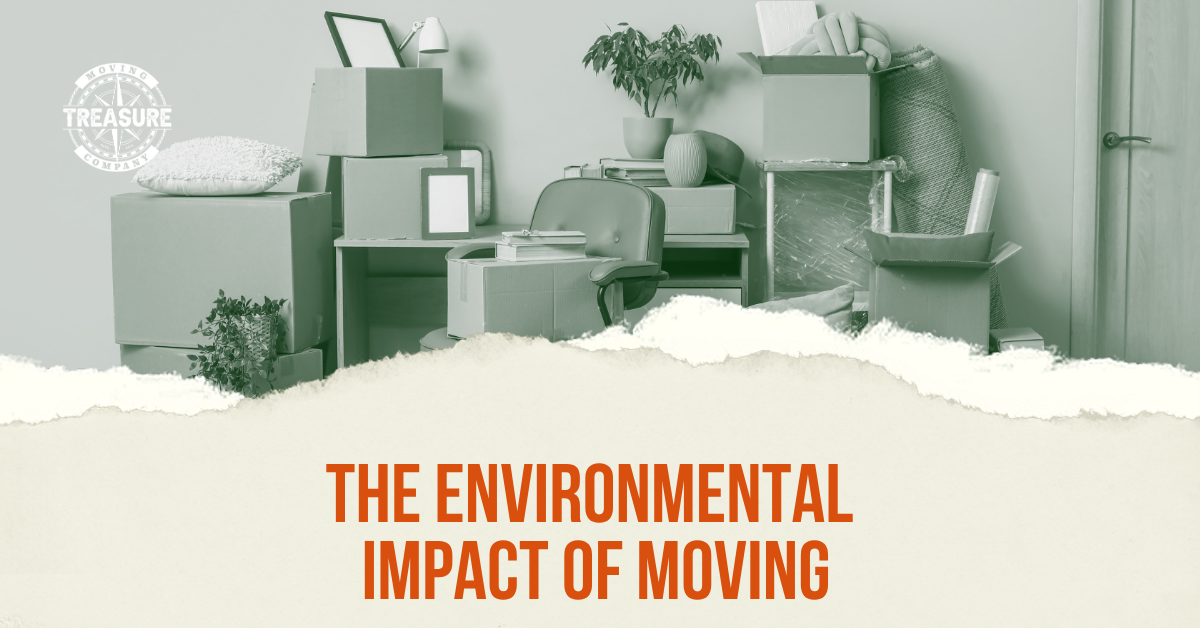
The environmental impact of moving is not limited to the diesel a truck burns on I-270 or the emissions from a long-distance haul. Those factors are real, but they are only part of the picture.
The highest and most preventable environmental cost happens after the move: when items arrive damaged, cannot be used, and are discarded or replaced. A sofa that costs $2,000 does not just represent manufacturing emissions once. If it is broken in transit and replaced, the environmental cost is effectively paid twice, once to produce it and again to manufacture and deliver its replacement.
Most sustainability discussions focus on packaging waste and transportation fuel. Those matters, but they are only two of three major impact categories. The third, replacement waste from damaged or discarded goods, is where the most avoidable environmental impact occurs.
What Is the Environmental Impact of Moving to a New Home?
Before looking at solutions, it is important to define the problem clearly. The environmental impact of a residential or commercial move does not come from a single source. It comes from three separate systems working simultaneously, and most standard sustainability guides address only one or two of them.
A complete view includes packaging waste, transportation emissions, and the often overlooked third category: replacement goods when items are damaged and must be discarded.
Core Impact Categories in Residential Moving
| Impact category | How standard moves create it | How sustainable moves reduce it |
|---|---|---|
| Packaging waste | Single-use cardboard, tape-contaminated boxes, foam, and bubble wrap are discarded after unpacking | Reusable bins, biodegradable cushioning, box recovery or reuse systems |
| Transportation emissions | Diesel fuel consumption per mile, inefficient routing, multiple trips, or partial loads | Consolidated truck loads, optimized routing, modern lower-emission fleets |
| Replacement goods waste | Damaged furniture or electronics are discarded and repurchased, doubling the production footprint | Higher-protection packing systems and handling that reduce breakage and replacement |
The Hidden Impact Most Guides Miss
Packaging and fuel are visible and easy to measure. Replacement waste is not.
When an item is damaged during a move, the environmental cost is not just disposal. It includes full re-manufacturing: raw materials, production energy, packaging, shipping, and delivery of a second version of the same product. In many household moves, this “invisible second footprint” can exceed the transportation-related emissions.
The Montgomery County Context
Rockville is part of Montgomery County, which has set an 80 percent waste diversion target by 2040 and maintains one of the more structured residential recycling systems in the region. In that context, how materials are handled after a move matters as much as how they are transported.
For example, Montgomery County requires cardboard to be flattened, clean, and free of tape before it can be processed effectively. Moving boxes that are wet, heavily taped, or structurally damaged are often rejected or downcycled, which reduces their environmental value.
Systems that extend the usable life of packing materials, rather than treating them as single-use waste, align more closely with the county’s long-term diversion goals.
A single metric, such as fuel use or recycling rate, does not define a truly sustainable move. It is defined by how well it prevents waste across all three categories before it ever reaches the landfill or manufacturing cycle again.
Single-Use Packing Materials: The Biggest Source of Moving Waste
Most people assume the environmental cost of moving is mainly fuel. In practice, one of the largest and most immediate sources of waste is packaging materials that serve only a single purpose: protecting household items for a few hours in transit before being discarded.
A standard three-bedroom move generates a surprisingly large volume of temporary materials, most of which are never reused.
Typical Waste Generated in a Standard Move
- 30 to 50 cardboard boxes
- 50 to 80 feet of bubble wrap
- Multiple rolls of packing tape
- Foam peanuts or loose-fill padding
- Plastic stretch wrap for furniture protection
In most cases, these materials are used for a short protection window, then flattened, broken down, or discarded after arrival. Even when recycling is attempted, not all of it is accepted in practice.
Scale of the Impact
- 30–50 boxes generated in a typical 3-bedroom household move
- 50–100 moves are possible from a single set of reusable industrial bins
- 5–10x higher impact when damaged goods must be replaced instead of being protected properly
The real environmental multiplier often comes from breakage. When an item is damaged, the footprint of replacing it can exceed the footprint of protecting it correctly in the first place.
The Cardboard Recycling Gap
Cardboard is recyclable in theory, but it often enters the system in a condition that limits or prevents its actual recycling.
Key issues include:
- Packing tape bonded across seams and surfaces
- Moisture exposure during loading or unloading
- Compression and tearing under stacked loads
- Residual dust or household debris contamination
Because tape removal is rarely done after a move, a significant portion of used boxes ends up downgraded or diverted to landfill, despite being technically recyclable.
Greener Alternatives to Traditional Packing Materials
Reducing waste requires replacing single-use cushioning systems with reusable or fully recyclable options.
- Biodegradable packing peanuts break down in water, leaving no long-term residue.
- Paper-based cushioning systems replace bubble wrap for the most fragile household items.
- Soft goods wrapping uses towels, clothing, and linens already in the move, eliminating extra materials
For high-value or high-risk items, however, material substitution alone has limits. Protection quality still matters as much as sustainability.
Reusable Bins: A Closed-Loop System
Industrial reusable moving bins address the waste problem at the source rather than reducing it incrementally.
- One set of bins can complete 50 to 100 moves before replacement
- They eliminate the need for thousands of cardboard boxes over their lifecycle
- They are cleaned and recirculated instead of being discarded
- They reduce both waste volume and post-move cleanup time
For commercial relocations in particular, reusable bin systems remove one of the most persistent waste streams in office moving: corrugated cardboard disposal.
Single-use packing materials are often treated as unavoidable, but they are actually one of the most replaceable components of the moving process. The difference between a traditional move and a low-waste move is not the absence of materials, but whether those materials are designed for single-use or multi-use.
Downsizing Possessions Before a Move: The Environmental Case for Going Lighter
The most effective environmental decision in any move happens before packing begins. It is not about materials, trucks, or routing. It is about volume. Every item left behind removes the need for packaging, reduces transportation load, and eliminates the possibility of breakage and replacement, which is often the largest hidden source of environmental impact.
Put simply, fewer items moved means fewer emissions, less waste, and fewer downstream replacements.
Why Moving Less Has the Highest Environmental Impact
Each item removed from a move creates a chain of avoided impact:
- No cardboard, tape, or protective materials required
- Lower truck weight and reduced fuel consumption
- Reduced risk of breakage and replacement manufacturing
- Less post-move disposal or recycling burden
Unlike packaging improvements or routing efficiency, downsizing directly reduces all categories of environmental costs at once.
The Three-Destination System for Decluttered Items
A structured approach prevents usable goods from becoming waste. Items removed from the move should follow a clear hierarchy based on remaining life and reuse potential.
1. Donate (extend useful life)
Items in good condition should remain in circulation.
- Furniture and household goods: A Wider Circle
- Building materials and appliances: Habitat for Humanity ReStore
- Smaller items: Buy Nothing groups, Nextdoor community exchanges
The key is timing. Donations should be scheduled before moving day so items never enter the truck unnecessarily.
2. Sell (local reuse with zero transport footprint)
Items with resale value should be kept in the local system whenever possible.
- Facebook Marketplace
- OfferUp
- Nextdoor
Local sales keep items in active use nearby, eliminating the need for long-distance transport and packaging waste.
3. Remove (end-of-life materials)
Items that cannot be reused should be handled in a single, consolidated process.
- Professional junk removal services sort materials for donation, recycling, or disposal
- One coordinated pickup is significantly more efficient than multiple personal vehicle drop-offs.
- Proper sorting increases the chance that materials avoid landfill entirely
The Dump Trip Inefficiency Problem
Multiple personal trips to disposal sites are among the least efficient ways to handle unwanted items.
Each trip:
- Burns fuel for a low-volume load
- Adds repeated vehicle miles
- Handles materials that could be consolidated in one dispatch
- Often bypasses proper sorting for reuse or recycling
When viewed as a system, professional junk removal is not just a convenience. It is typically the lower-carbon option for end-of-life items, thanks to consolidation and material-sorting efficiency.
Downsizing in Senior Moves
For older adults transitioning from long-term homes, downsizing is both logistical and emotional. The environmental benefit is significant, but the process itself requires structure and time.
Senior moving approaches that combine:
- Donation coordination
- Resale planning
- Junk removal scheduling
- Full move execution
It allows decisions to be made item by item rather than under moving-day pressure. This reduces unnecessary transport and ensures usable goods remain in circulation instead of being discarded.
Downsizing is not just preparation for a move. It is the point where environmental impact is most effectively reduced before it is ever created.
Your Sustainable Move Checklist: Before, During, and After
This checklist translates the sustainability principles in this guide into a practical, step-by-step reference for planning a lower-impact move from Rockville or anywhere in Montgomery County. It is designed to be used alongside your moving plan, not as an afterthought once packing has started.
Use it as a planning tool, share it with your moving coordinator, or compare it against any moving company’s standard process before booking.
Before the Move
- Complete inventory triage by separating items into donate, sell, or remove categories before packing begins
- Schedule junk removal in advance so disposal happens before moving day, not after loading
- Contact A Wider Circle to arrange furniture donation pickups ahead of the move.
- List usable items on local resale platforms such as Facebook Marketplace or Nextdoor for local reuse
- Request reusable moving bins from your moving provider, where available
- Use biodegradable or recyclable packing materials for any remaining single-use cushioning needs
During the Move
- Consolidate all household items into a single truck load, where possible, to reduce fuel consumption
- Keep clean, reusable boxes separate for potential reuse or Community Loop-style recovery programs at destination
- Label boxes clearly by room and priority to avoid unnecessary rehandling, unpacking, or disposal
- Avoid mixing donation-bound or discard items into the main moving load
After the Move
- Flatten cardboard boxes, remove all tape, and ensure materials are dry before placing them in recycling streams (Montgomery County requirement)
- Confirm junk removal items have been properly sorted into donation, recycling, and landfill categories
- Reuse or return any rental bins or reusable packing materials according to the provider's instructions
- If part of a corporate relocation, request a sustainability summary or materials diversion report for documentation
A single product or service does not define a sustainable move. It is defined by how intentionally each phase reduces waste, prevents unnecessary transport, and keeps usable items in circulation for as long as possible.
A Greener Move Starts with the Right Moving Partner in Rockville
The environmental impact of moving comes from three interconnected sources: packaging waste from single-use materials, transportation emissions from the move itself, and the often-overlooked replacement cost when items are damaged and discarded rather than reused. A genuinely sustainable move addresses all three, not just the most visible one.
Reusable bins reduce reliance on single-use cardboard and lower the risk of damage during transport. Consolidated loading and routing help reduce unnecessary fuel consumption across the move. Donation coordination with partners such as A Wider Circle, combined with junk removal systems that prioritize recycling and reuse, helps prevent usable items from becoming landfill waste. Programs like Community Loop keep materials circulating locally in Rockville instead of cycling through inconsistent recycling streams.
Treasure Moving serves Rockville, MD, and the wider Montgomery County area with
local moving, residential and
commercial relocation,
packing services, and
junk removal, incorporating sustainability practices where appropriate.
To request a quote or learn more about sustainable moving options,
contact Treasure Moving now!
What is the environmental impact of moving compared to other household activities?
A standard residential move generates roughly 50 to 80 pounds of single-use packing material waste, burns 10 to 30 gallons of diesel fuel depending on the distance, and, in cases where items are damaged and replaced, adds the full manufacturing carbon cost of the replacement goods. The total carbon footprint of a poorly managed move can exceed the annual carbon footprint of several months of normal household activity. Pre-move downsizing, consolidated shipping, and reusable bin packing are the three most effective reductions available.
Are reusable plastic bins actually better for the environment than cardboard?
Yes, across their service life. A single set of industrial-grade reusable moving bins replaces 500 to 1,000 cardboard boxes before requiring disposal. They also eliminate the tape-contamination problem that makes many moving boxes non-recyclable, and they provide superior crush protection that reduces item damage and the associated carbon cost of replacements. For high-value items, reusable bins are the structurally and environmentally superior choice.
Does Montgomery County accept moving boxes in its recycling program?
Montgomery County’s single-stream recycling program accepts flattened cardboard that is free of tape and completely dry. Most moving boxes, which are taped, compressed, and sometimes lightly soiled, do not meet these criteria and are rejected or downcycled. The Community Loop program prevents this problem by keeping usable boxes in active circulation. For boxes that are too damaged for reuse, remove all tape, flatten, and ensure they are dry before placing them in the recycling bin.
How does the Community Loop box program work?
After a completed Treasure Moving job in the Rockville area, clean and structurally sound boxes are collected and offered at no charge to the next customer who needs them. Customers who want Community Loop boxes rather than new boxes simply request them when booking. Customers who want to contribute boxes to the program simply set aside their clean, undamaged boxes at the destination rather than discarding them.
Can Treasure Moving provide documentation for corporate ESG reporting?
Yes. For corporate clients with Scope 3 emissions reporting requirements, Treasure Moving can provide a post-move sustainability summary including packing material waste diversion, donation documentation from A Wider Circle, and fleet compliance information.